Coming out of the first year of college, I needed to take a year off to “find myself,” or specifically, the right major and the right college. Accounting was not my thing as evidenced by a D+ and my eagerness to sell the textbook, rush to downtown Waltham to the record store and purchase two albums: the soundtrack to “Xanadu” and Prince’s “Dirty Mind.”
Back home, I wasted no time throwing myself into work at the warehouse that stocked the shelves of a regional pharmacy chain named CVS. I was also keen on atoning for the lackluster academic performance of my first year in which I had also failed precalculus despite the instructor’s regular pleas to visit the Math Center, so I enrolled in a math course at night at the local college, earning my first and only B-/C+. The plan was in place: full-time job in the day and a college course in the evening with the goal of returning to college the following fall.
But the next weekend, and every weekend for the next four years, I was a security guard at the Tupperware factory. I was recruited by my grandfather to take his place as he was retiring, and he assured me that my coworkers, all World War 2 veterans, “are a great bunch of guys. They’ll take care of ya.” And that’s how, on my first day, I met Pacific Theater Frank, the third shifter I replaced in the morning, and European Theater Jack, who greeted me in our 12 foot by 12 foot square guard shack with a brief orientation of the operation.
Leaning back in his swivel office chair, lips pursed around a Marlboro, Jack peered at me and explained the workings of the desk:
“Top drawer: phone book and trucker log, pens and pencils. Second drawer: cigarettes, my lunch and incidentals. Third drawer: reading material,” the last accompanied by a wink and a nod. On that first day, Jack related how “we” were responsible for conducting several rounds each day of a four-story brick 1896 factory, “not so much to catch thieves as much as to catch fires.” I noted Jack’s protruding stomach—easy enough as he reclined, belt buckle undone—and, by way of introducing the notion of my doing the rounds for the two of us, he added, lifting his shirt to expose a purply horizontal gash, “on account of my mortar wound. I got it in the war.”
From there we were fast friends. Each Saturday and Sunday, we’d begin our ritual with a deal: I’d show up for the shift with two cups of coffee and a Boston Globe for me and a Herald for Jack. He and his warm, charming and humorous wife, Helen, would also buy me a Megabucks ticket with the same number each week. (Despite continuing this purchase long after I moved away, they never won!) With that, I’d be off for three rounds a shift, surveying each floor for signs of trouble, something I found very little of.
At 19 and with a full-time girlfriend in addition to full-time college, many times I’d make it to Tupperware exhausted. Jack and I would be in conversation and I’d nod off, only to hear his 58-year-old derision: “Oh, you were out with that girl again last night, huh?” adding, “HEY!” sending my chin off my supportive hand. As I gathered myself together for a round, Jack would blow rings of smoke toward the ceiling and add, “Yep, I remember those days. I hope you got some, at least!”
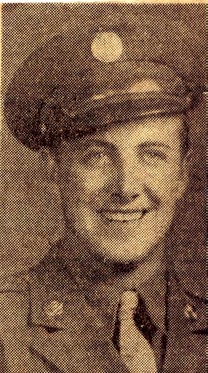
Jack was generous in sharing his stories and his advice. Born in 1925, he was motherless at 13 when his mom was killed in the Hurricane of 1938. Just five years later he grew up even faster, serving in the United States Army as a radio operator in the European theater. As I was learning about the war in class during the week—I had moved on from the full-time job to a new girlfriend and to full-time college—Jack regaled me with tales from his service, including one that I turned into a one-act play I wrote for class in which Jack and his team were cornered just inches above Germans who, too, had sought out the highest point in an abandoned war-torn town. “We had to stay absolutely still and awake for 36 hours straight. I thought about my life, Helen back home, people I’d met along the way, you know?” He shared how he had met a girl in Europe and “I could have stayed there” after the war, but, severely injured in combat and with several years of service, he returned home to Blackstone where, soon after, “I walked up to Helen’s house, saw some bastard trying to court her, and threw him off the porch!”
For four years, nearly every weekend, Jack and I manned the guard shack, greeting truckers, “inspecting” their cargo (what we were looking for, we weren’t sure) and semi-assuring all who passed that we were in control. Meanwhile, as I progressed in my studies, Jack (and Helen) were a constant presence, inviting me to dinner from time to time and generally listening to my angst in life and love in my early 20s. When a reckless driver totaled my car while on my way to work and my father dropped me off at Tupperware, Jack’s first question was, “Did the coffee survive?” (It didn’t.) When I was stuck two blocks from the plant in an ice storm, Jack calmly made his way with me to the car and taught me how to drive on ice. And when my girlfriend broke up with me on my 22nd birthday, Jack was there the next morning to console me, a clearly broken-hearted soul, offering, “Pick yourself up, you broken bastard. Geez!”
Oddly, while I looked to Jack for wisdom, I learned that he suffered from self doubt as well. One day Jack volunteered that he’d be off the next week to attend an annual spiritual weekend. I expressed surprise—he came off as a bit irreverent in such matters—and more so when he blurted out “I don’t think I’m going to heaven,” adding, when I asked why, “I killed people.” Taken aback, I offered that that was in the context of war, surprising myself at how reflective I sounded. But he looked ahead, puffing away, saying nothing.
Later when I moved away for graduate school, Jack and Helen stayed in touch, and we dined each year when home for the holidays. At one dinner when I introduced them to the woman who’d become my wife, Jack recalled for her how a series of thefts had rocked the Tupperware factory during our time there, and how Jack had dissuaded me from sharing the little bit of information I knew. “Don’t say anything. Someone will talk,” he had told me then, wanting to protect me, and this day years later he concluded, “And they did. The culprit was caught.” Sitting across from him years later, I paused, a smug, self-assured smile spreading across my face. “That’s right. And that someone was me!” Helen smiled and looked over at Jack, eyebrows raised, impressed. Jack, tilting his head, paused and puffed before speechlessly nodding, approvingly.
 cgregoryphd.com